Thursday, October 21, 2010
Truth about Speed and Agility
A very common question I am asked by athletes or parents of athletes is how to improve there foot speed or overall quickness. There are many drills and training tools developed for improving these two aspects of training. A common training tool you will see athletes use to develop foot speed is an agility ladder. One can expect a noticeable difference very quickly on these ladders. The reason I do not like to use these very often is because I do not think they translate to game speed very well. Most drills done, on an agility ladder, will help improve those specific drills while lacking improvement in real world foot speed or agility. The athlete will see results quickly on these ladders because they will be improving the specific movement they are practicing, with little room for progressions. My personal preference is to use these ladders during warm-ups to help wake the CNS, as well as getting the mind and body ready for the workout. The two common ways to improve athletes actually running speed is increased stride length or stride frequency. The key is to improve one while maintaining the other. If you improve frequency by cutting down the stride you will not notice a difference in your overall speed and vice versa. The common method used to improve frequency is over speed training. This can be done by sprinting 100% down a hill or by accelerating forward with the help of a bungee cord; all while maintaining your normal stride length. This is done to teach your body to move faster then 100% allowing you to improve your overall stride frequency. To improve stride length a common drill done by athletes is called striders. These are done running between 70-80% focusing on opening the stride longer then your normal length. By performing striders your teaching your body to open up more in the hips, eventually allowing for a longer running stride without sacrifice overall frequency. All these drills work and are used by many top level athletes to improve overall speed. The question I ask myself is how long can ones stride be lengthen or how much faster can an athlete actually turn there feet over to improve frequency? Using these drills alone will lead to athletic improvement quickly followed by a plateau. The key to increasing overall speed and agility is not only use of the drills mentioned above but also training to improve overall strength! The number one mistake athletes will make while trying to improve speed and agility is not training to improve strength. The common reason for this is because the athlete doesn’t want to get big and bulky, but only wants to improve speed. If you are making a sharp cut to change directions or accelerating forward during a sprint the determining factor is always going to be the force output generating from the ground by the foot. How do you improve your force output? Simply improve your overall strength! By training for strength alone you will not develop explosiveness and may actually slow down ala power lifters. I believe this is the major reason athletes shy away from training for strength to develop overall speed and agility. By using max effort strength days to develop a strong set of legs while working on running mechanics drills and dynamic/explosive effort days you can be assured in developing some serious game speed! That added strength will allow for more force generating each stride allowing for a longer more explosive stride. Also by using the max effort/dynamic effort lifting model your frequency of the stride will improve greatly as well.

Monday, October 18, 2010
5 Reasons all combat athletes must train with kettlebells
Being a performance enhancement specialist, as well as an overall Strength and Conditioning junkie, I am always thinking of different things that will benefit my athletes. As I watched UFC 119 the other night I was thinking of the many benefits kettlebell training will have for all combat athletes. This got me thinking and this is what I came up with as my 5 top reasons combat athletes need kettlebells in training;
1: Hips and Core Work
Whether you're shooting a take down or throwing a knock out punch all the power is generated from the ground up, through the legs, hips and core. Coincidentally all major kettlebell movements are multi-joint exercises that utilize the hips and legs to generate the power. The hip snap generating momentum on swings, cleans, and snatches will improve power on finishing takedowns or throwing a punch. Also having to brace the core during both the concentric and eccentric portion of these lifts will improve core strength dramatically.
2: Grip Strength
There is a laundry list of benefits grip strength has for combat athletes. Kettlebells are unique in the fact that they have thick handles and are used often in high rep sets. This will increase your sustained grip strength. Sustained Strength is being able to maintain strength over time. Think locking a submission and holding for 20-30 sec period or fighting for hand position for a 2 min period on the feet.
3. Improve Shoulder Strength/Flexibility
All combat athletes run a high risk for shoulder injuries. Kettle bells are unique in the manner that they allow greater range of motion. The way the bell will sit against the forearm will take a lot of rotator stress out of play allowing for increased strength and flexibility in the shoulder girdle. Movements like the windmill have yoga benefits as far as flexibility but add a twist of strength. Long sets of clean and jerks or snatches will improve endurance in the shoulders, overall grip strength, and is a full body movement utilizing the legs, hips, and core, starting to make sense yet?
4. Improve integrity of joints, tendons and ligaments
No one can argue that combat sports are as taxing on the body as it comes, hence the name! The ballistic shock your body experiences during kettlebell lifts will greatly improve the integrity of your tendons/ligaments and joints bringing the risk of injury down greatly. This helps with the injury prevention aspect of training. This is a major point lost over the years in strength and conditioning and a very important one. Staying healthy allows for the athlete to show off there new found strength!
5: EXTRMELEY Effect Conditioning Tool
The days of running miles on end to improve conditioning are behind us. Combat athletes must perform an-aerobically for long durations of time with opponents hanging all over them. Kettlebells can be used as unbelievable conditioning tools to mimic movements occurring during the fight or match (improved GPP and SPP!) Kettlebell complexes can be done using timed sets so the athlete trains the exact time frame of there match. The ROM allowed with KB also allows movements very similar to sports specific movements.

1: Hips and Core Work
Whether you're shooting a take down or throwing a knock out punch all the power is generated from the ground up, through the legs, hips and core. Coincidentally all major kettlebell movements are multi-joint exercises that utilize the hips and legs to generate the power. The hip snap generating momentum on swings, cleans, and snatches will improve power on finishing takedowns or throwing a punch. Also having to brace the core during both the concentric and eccentric portion of these lifts will improve core strength dramatically.
2: Grip Strength
There is a laundry list of benefits grip strength has for combat athletes. Kettlebells are unique in the fact that they have thick handles and are used often in high rep sets. This will increase your sustained grip strength. Sustained Strength is being able to maintain strength over time. Think locking a submission and holding for 20-30 sec period or fighting for hand position for a 2 min period on the feet.
3. Improve Shoulder Strength/Flexibility
All combat athletes run a high risk for shoulder injuries. Kettle bells are unique in the manner that they allow greater range of motion. The way the bell will sit against the forearm will take a lot of rotator stress out of play allowing for increased strength and flexibility in the shoulder girdle. Movements like the windmill have yoga benefits as far as flexibility but add a twist of strength. Long sets of clean and jerks or snatches will improve endurance in the shoulders, overall grip strength, and is a full body movement utilizing the legs, hips, and core, starting to make sense yet?
4. Improve integrity of joints, tendons and ligaments
No one can argue that combat sports are as taxing on the body as it comes, hence the name! The ballistic shock your body experiences during kettlebell lifts will greatly improve the integrity of your tendons/ligaments and joints bringing the risk of injury down greatly. This helps with the injury prevention aspect of training. This is a major point lost over the years in strength and conditioning and a very important one. Staying healthy allows for the athlete to show off there new found strength!
5: EXTRMELEY Effect Conditioning Tool
The days of running miles on end to improve conditioning are behind us. Combat athletes must perform an-aerobically for long durations of time with opponents hanging all over them. Kettlebells can be used as unbelievable conditioning tools to mimic movements occurring during the fight or match (improved GPP and SPP!) Kettlebell complexes can be done using timed sets so the athlete trains the exact time frame of there match. The ROM allowed with KB also allows movements very similar to sports specific movements.

Thursday, October 14, 2010
OG Wrecking Crew Getting It In!!
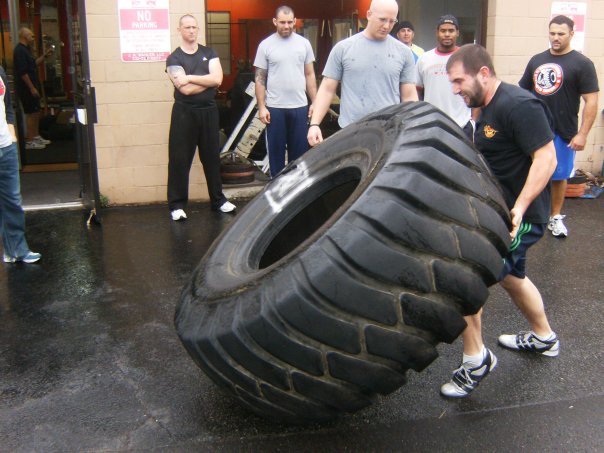
With HS wrestling season starting in a little over a month the OG Wrecking Crew is starting to see some massive strength gains. We are gunna be hitting it extremely hard for 4 more weeks then deload into the season. Here are some highlights from tuesdays workout...
Wednesday, October 13, 2010
Zach Even Esh Killing It...
Check out these videos of my major mentor in Strength and Conditioning, Zach Even Esh killing a leg workout rocking my t-shirt!!
Monday, October 11, 2010
Monday Motivational Video
Hope everyone is kicking a$$ this monday and making things happen. I appologize for the delay of content of late but I am working on a big project that I will be launching on my blog for all of you by mid week! Check out the video below to get yourself going for the week.
Thursday, October 7, 2010
5 Tips On How To Stay Motivated

It happens every year in upstate New York. Once the weather begins to turn and the days become shorter the excuses pile up and people become lazy! This may be your performance at work or in the weight room. Over the past 10+ years of working out I have fell into this hole as well. I have always been able to fight through it and come back better then I was before by following these few simple tips.
1)Take Action- I was having a conversation with a member at the gym the other day and he was talking about how he wanted to check out that “social network” movie about the development of facebook. He went on to say how the kid was a fraud and stole the idea from someone else. What’s the difference between the kid who just donated $10 million to Newark School District and the chump who is living off of the fact that someone stole his idea? He took action! Everyone has had a million dollar idea but never do anything about it. Take action every day of your life and I promise you your performance at work or under the weights will improve dramatically, regardless of what season it is outside.
2)Music- I am constantly changing my playlist on my ipod to keep the music fresh and motivating to me. You may be wondering “how can music keep me motivated during work?” Remember I am a meathead and this blog is geared more towards strength and conditioning so deal with it!
3)Competition- Everyone has a competitive nature that allows you to step your game up. By looking at your workout as a competition against yourself you will push that much harder allowing for some kick a$$ workouts.
4)External Motivation- This could be a lifting partner or even a personal trainer. Make sure it is someone that will keep you on task and kicking some serious a$$.
5)Surround yourself with motivated individuals- Right now at 25 I am more motivated then I have ever been before, why? I spent three days at a seminar with 32 other highly motivated individuals, all action takers. Believe it or not this will rub off. If you surround yourself with successful individuals you will become successful. Unfortunately this works both ways, if you’re surrounded with scum bags guess what? You are a scum bag!
There you have it, 5 tips on how to stay motivated and kicking a$$. Stay tuned within the next week or so I will be launching a serious project that will be given away for FREE to all of you.
Tuesday, October 5, 2010
Subscribe to:
Posts (Atom)